
Maragheh, East Azerbaijan, Iran+98 996 620 0261

ATA Knowledge Center

Applied knowledge on irrigation, soil and water management — written by ATA's engineering team.

What is subsurface irrigation, and how does it differ from surface drip? Irrigation6 minWhat is subsurface irrigation, and how does it differ from surface drip?

A technical comparison of the two approaches — from evaporation to emitter clogging.

Read more

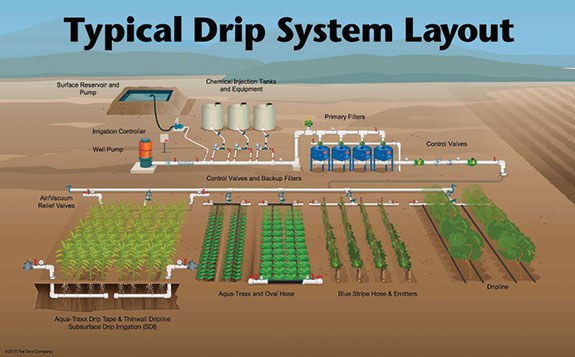
Subsurface irrigation injects water below the soil surface, directly in the root zone. In surface drip, water is released on the soil and part of it evaporates or runs off; subsurface eliminates both loss paths.

The second advantage is uniform moisture: the soil surface stays dry, so weeds and surface diseases are reduced.

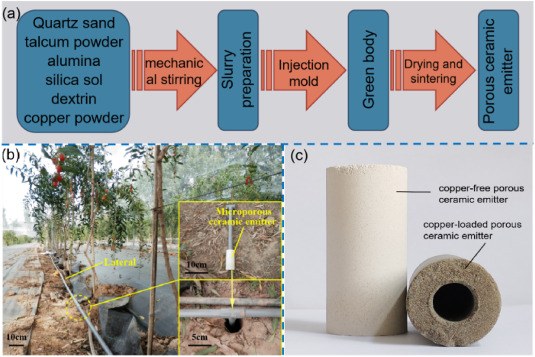
ATA leaves flow regulation to the soil itself through its porous ceramic body — no sensors, no power.
How your soil determines your farm's water use Soil5 minHow your soil determines your farm's water use

Matric suction, holding capacity and choosing the emission rate.

Read more

Water-holding capacity differs dramatically between sandy, loamy and clay soils; soil that holds moisture for a week in clay can lose it in two days in sand.

Subsurface irrigation must be configured per soil texture; ATA selects ceramic emission rates to match.

Before any project, a soil sample and texture test is the first step.

Water-management indicators for orchards in semi-arid regions Water8 minWater-management indicators for orchards in semi-arid regions

From potential evapotranspiration to irrigation scheduling.

Read more

In semi-arid regions like East Azerbaijan, potential evapotranspiration is high and irrigation windows are short.

Water management means deciding from data: available water, growth-stage demand and soil capacity.

Subsurface irrigation simplifies the equation by keeping moisture in the root zone.

Talk to us about your project

Initial consultation, plan review and a rough cost estimate — before you commit to anything.

Call Email