
Porous ceramic subsurface irrigation — water released at the root zone, no energy, no evaporation
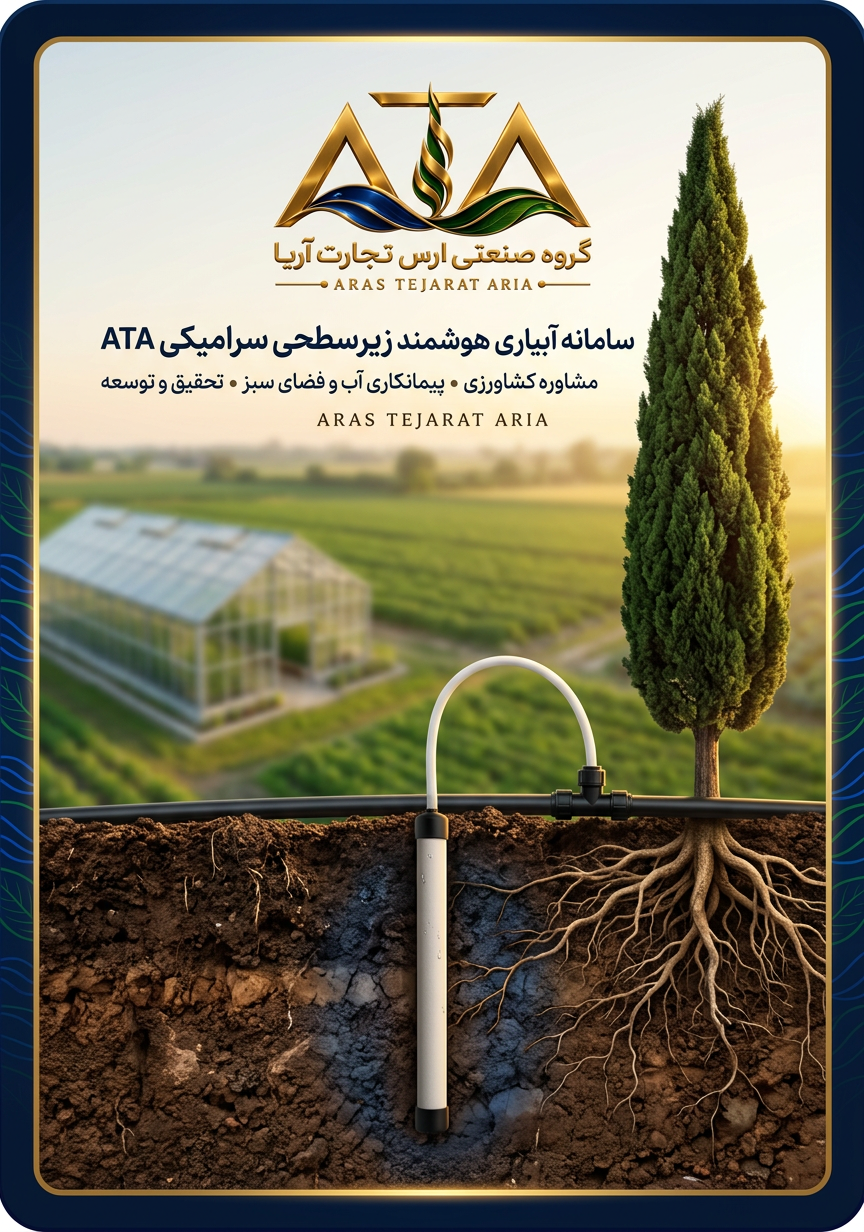
Aras Tejarat Aria (ATA) designs and manufactures porous ceramic subsurface irrigation tubes: water seeps through microscopic ceramic pores, driven by soil suction — no pumps, no power, no clogging emitters.
Official ATA posters
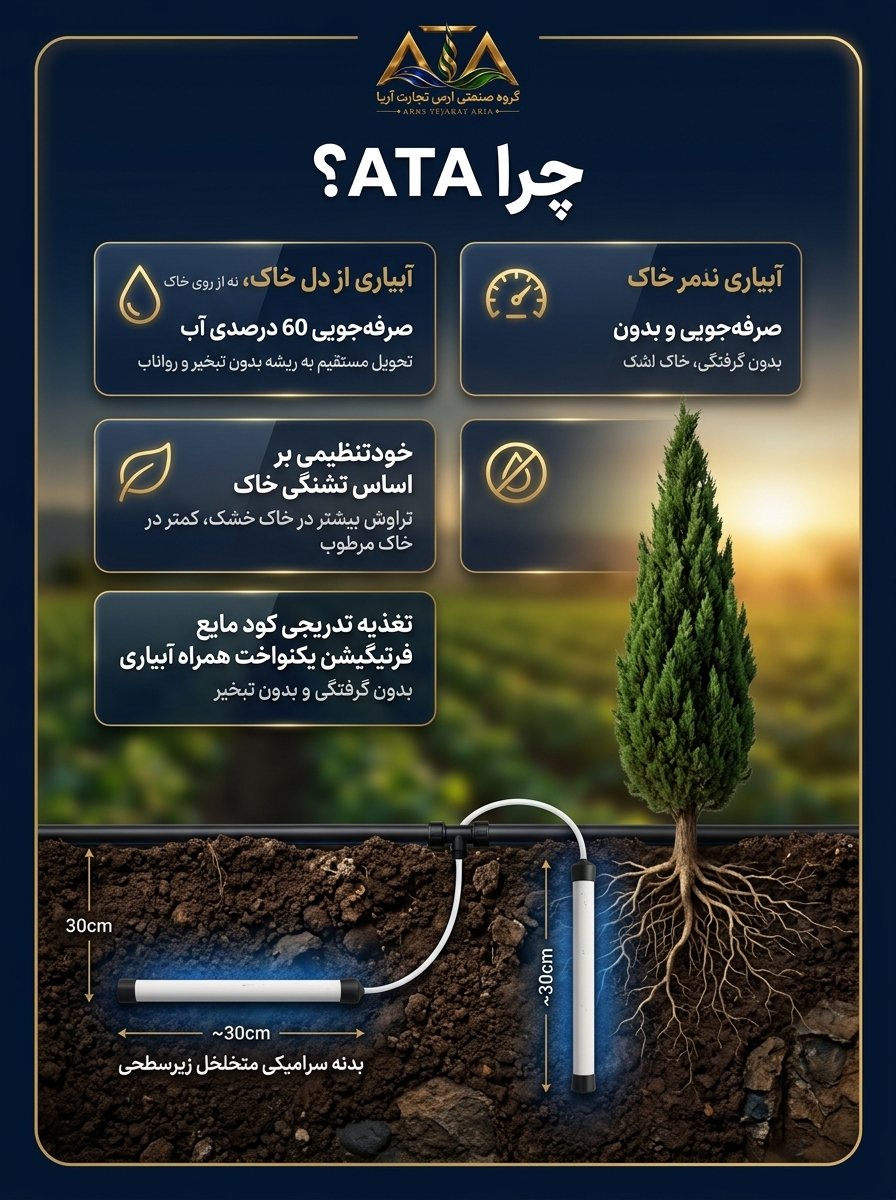
Technical sheet of ATA porous-ceramic subsurface irrigation — 30 cm installation depth, 30 cm capsule length, gradual liquid-fertilizer feeding (fertigation).

The water's path, from source to root
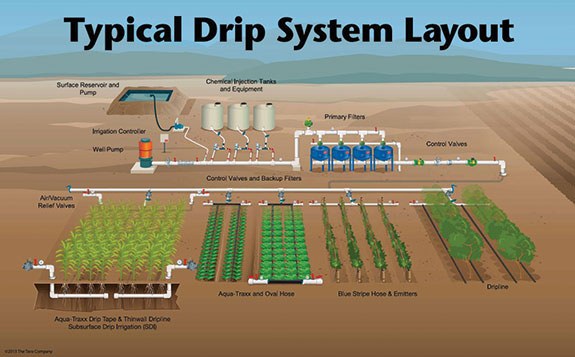
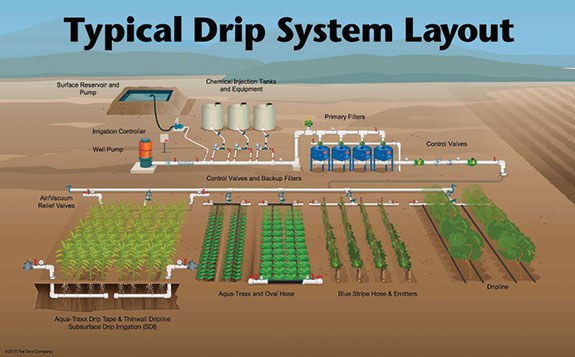
Follow the water from source to root zone in the diagram below — no high-pressure pump and no complex controller in between.
- Reservoir & source — Tank, well or municipal line at low pressure.
- Supply & filtration — Supply line and a simple filter to protect porosity.
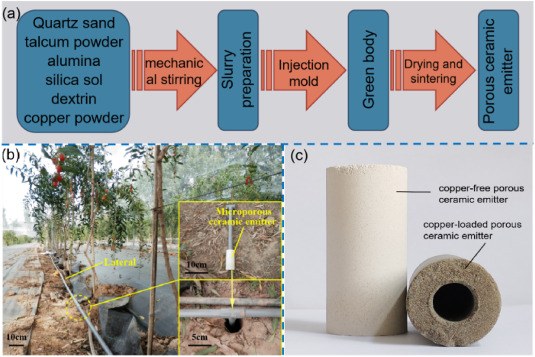
- ATA ceramic tube — The heart of the system; engineered porous body.
- Surrounding soil — Water spreads slowly through the soil bed.
- Root zone — Root suction draws water exactly where needed.
- Plant — Growth with uniform moisture and no water stress.
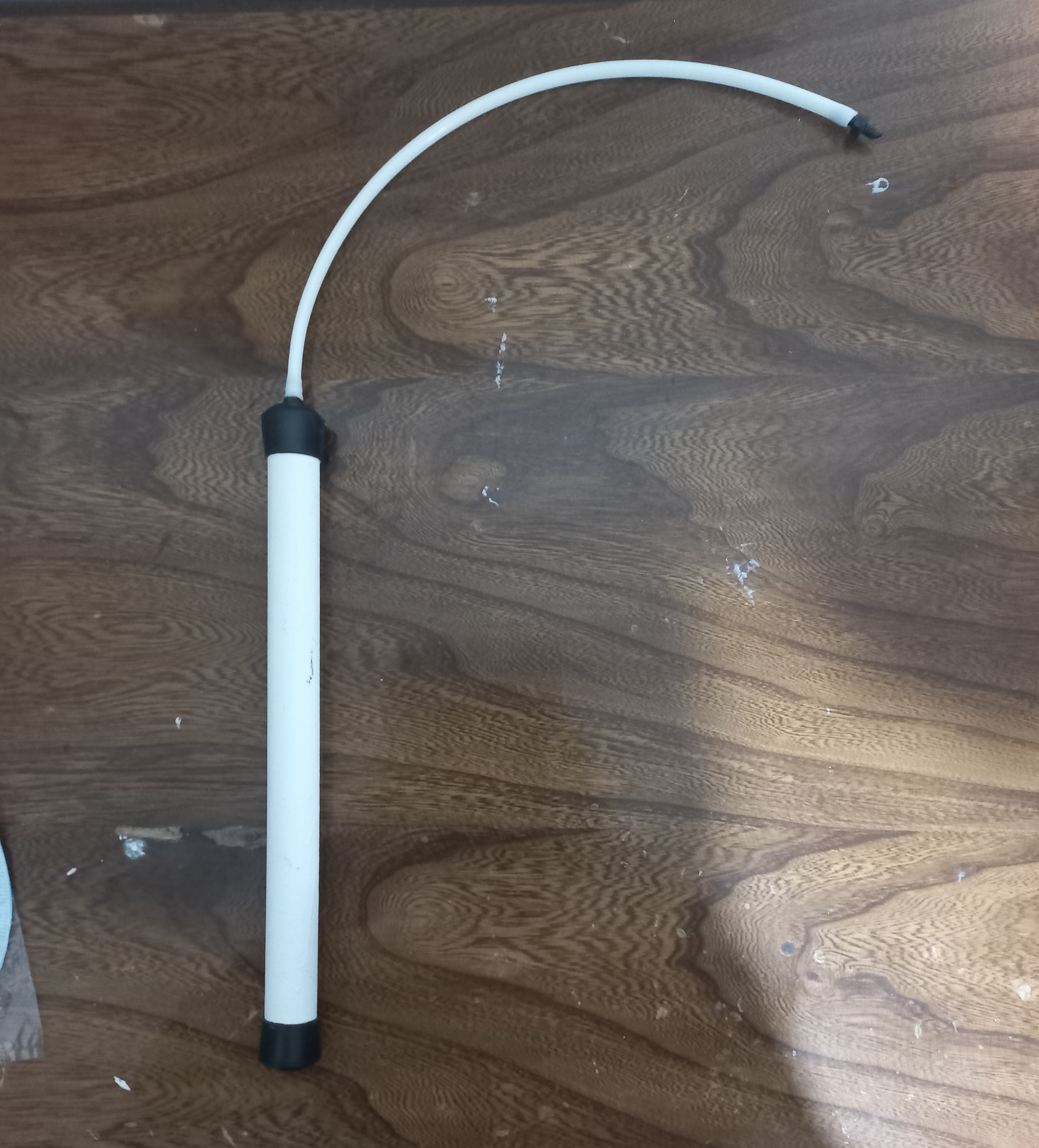
ATA Ceramic Irrigation Tube
The porous ceramic tube is the core of the ATA system. Technical figures on this page reflect current production samples and will be finalized after field validation.
- Material
- Engineered fired porous ceramic
- Nominal diameter
- 25 mm
- Emission rate
- Matched to soil — sample data
- Segment length
- 50 cm
Engineer Atako says…
The ATA brand's technical guide — Engineer Atako answers growers' most frequent questions about porous-ceramic subsurface irrigation.
- ◆The ceramic capsule installs 30 cm deep — right in the root zone, not on the surface.
- ◆The porous body self-regulates with soil suction: dry soil draws more water, wet soil less.
- ◆Fertigation runs through the same path; liquid fertilizer reaches roots without evaporation.
- ◆No electricity, no high-pressure pump, no sensors — ideal for land far from the grid.

Engineering benefits, not slogans
No surface evaporation or runoff; water only in the root zone.
Uniform moisture at depth; deep, resilient root growth.
No solenoids or controllers — the soil decides.
No moisture sensors or field power required.
Resistant to corrosion, UV and soil temperatures.
No moving parts; periodic inspection is enough.
Compatible with scarce water and low-input farming.
Trenching with standard machinery; no special equipment.
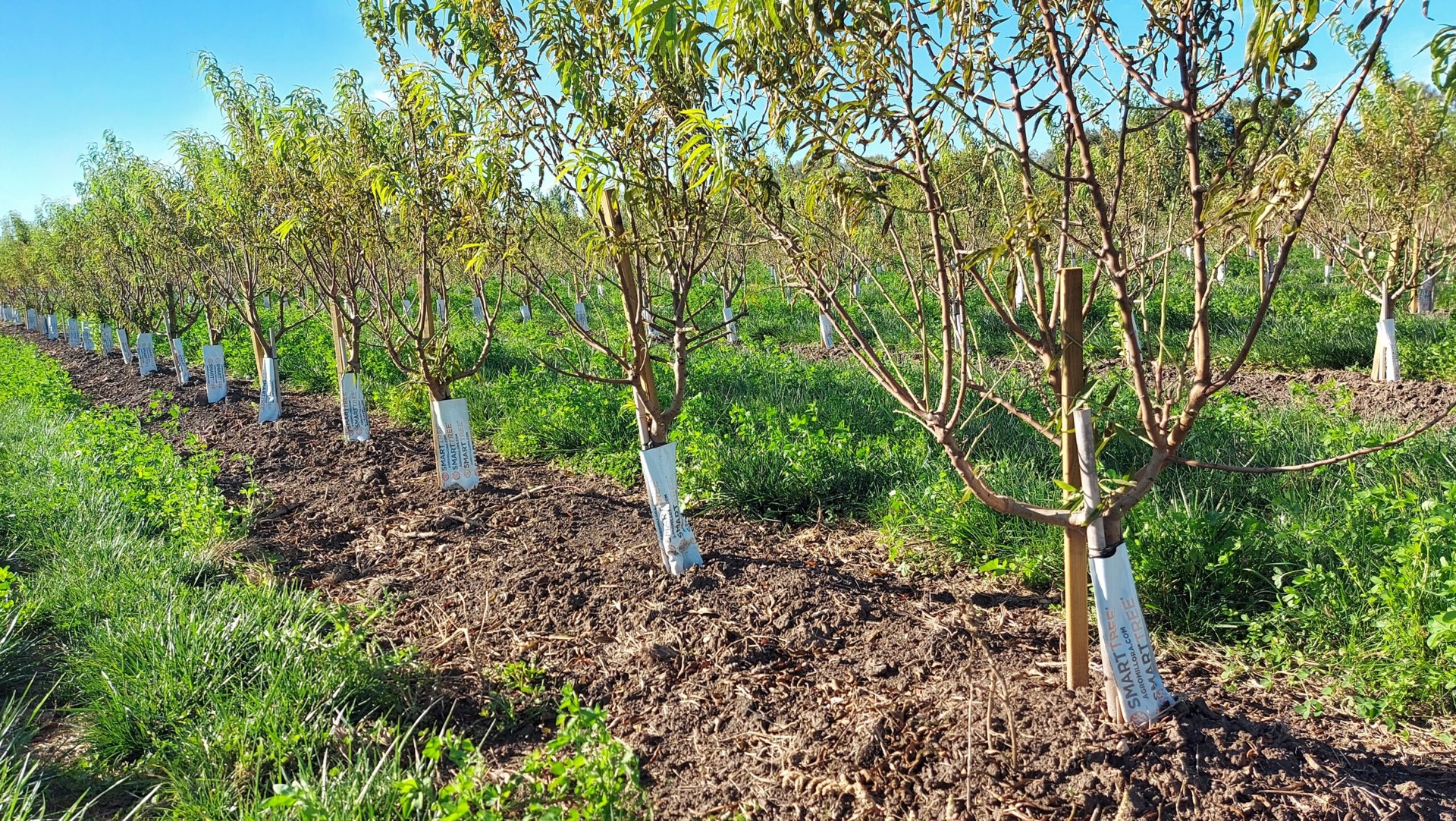
 OrchardsSubsurface rings at the base of every tree.Learn more ›
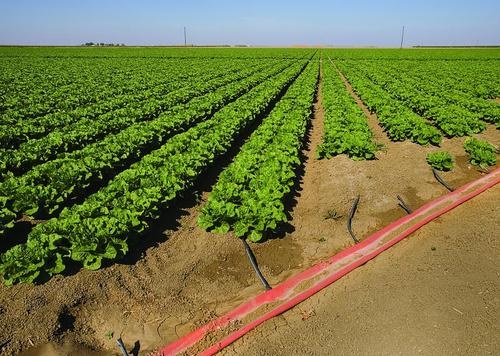
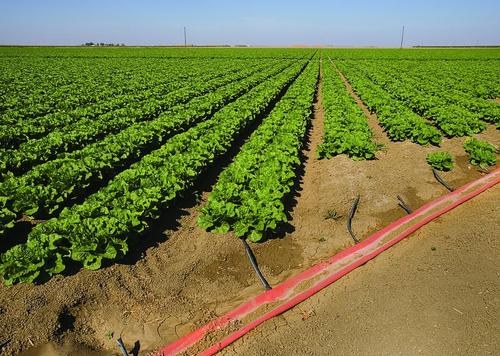
 Row cropsParallel ceramic lines at root depth.Learn more ›
 GreenhousesPrecision beds with controlled moisture.Learn more ›
 Urban agricultureRooftops, parks and green banks.Learn more ›
 Home & landscapeSmall packages for yards and garden beds.Learn more ›
From lab to field
ATA tests before it claims. Our product path has five stages.
Current trial results will be published after the validation cycle is complete.
Case studies
ATA's pilot and field projects in East Azerbaijan.

From the ATA Knowledge Center
Talk to us about your project
Initial consultation, plan review and a rough cost estimate — before you commit to anything.